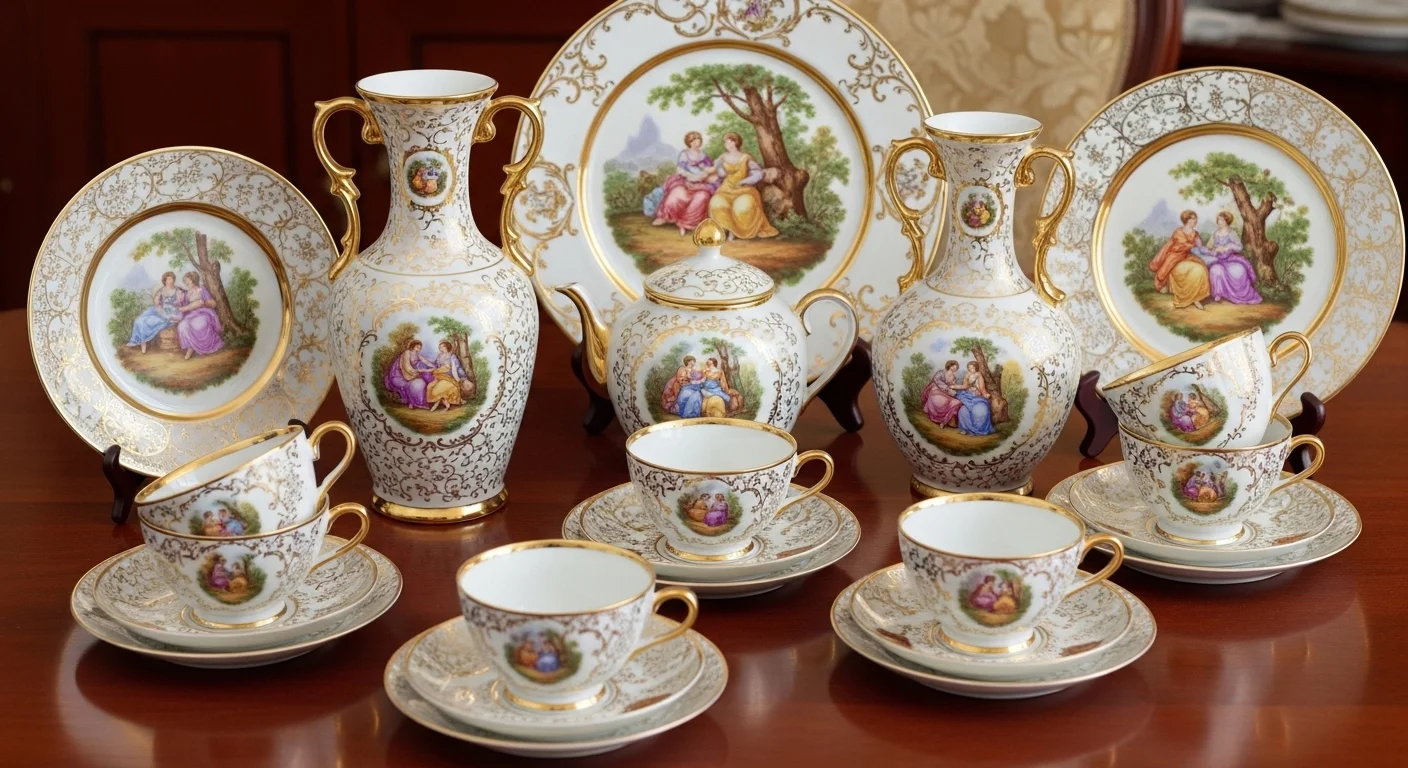
Synonyms for Porcelain often fascinate writers, artists, historians, and language enthusiasts because this elegant word carries the delicate aura of craftsmanship, refinement, and timeless beauty. Porcelain has long been associated with fine ceramics, graceful tableware, and artistic pottery, so exploring synonyms for porcelain opens the door to a rich vocabulary connected with ceramics, china, earthenware, and glazed artistry. In language as in art, a single concept can bloom into many expressions, each capturing a slightly different shade of meaning.
When discussing synonyms for porcelain, terms such as fine china, ceramic ware, bone china, pottery, glazed ceramic, and delicate china frequently appear. These synonyms for porcelain help writers describe fragile beauty, refined household items, or decorative craftsmanship with greater precision. Whether used in literature, design descriptions, or historical writing, understanding synonyms for porcelain allows language to shine with elegance and clarity, just like the smooth, luminous surface of the material itself.
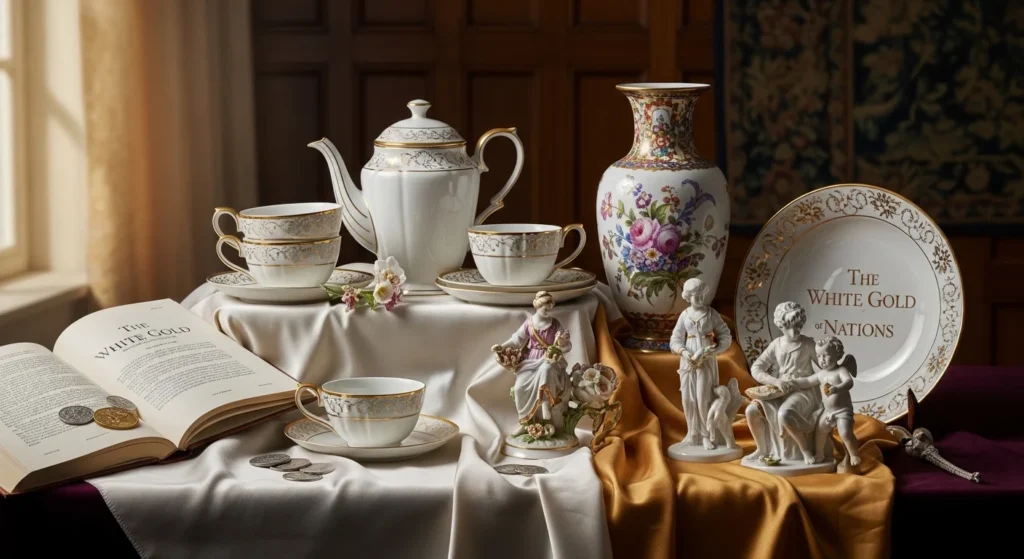
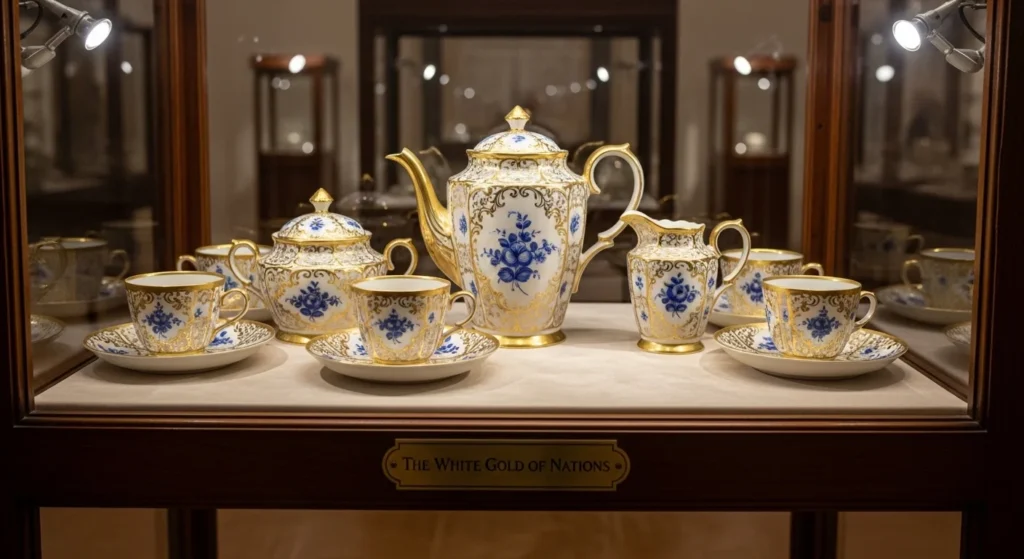
“Porcelain is the glass of the East, the marble of the West, and the poetry of both.”
You were at an estate sale. A delicate cup caught the light—translucent, ringing like a bell when tapped. The tag read “Fine China.” Another read “Hard Paste Porcelain.” A third: “Bone China.” You realized, holding them all, that you held the same substance described three different ways, each term carrying centuries of technological revolution, trade secrets, and imperial ambition.
In 2025, as “quiet luxury” trends revive heirloom-quality tableware and collectors seek authentic mid-century modern ceramics, understanding porcelain’s vocabulary isn’t just aesthetic—it’s archaeological literacy. The difference between “hard paste” and “soft paste,” between “china” and “bone china,” represents 1,400 years of human innovation from Tang Dynasty kilns to English country houses.
Part 1: The Fundamental Distinction – What Porcelain Actually Is
The Scientific Definition
Porcelain is a ceramic material characterized by:
| Property | Characteristic | Result |
|---|---|---|
| Primary clay | Kaolin (china clay) | White, fine, plastic |
| Firing temperature | 1,200–1,450°C (2,200–2,640°F) | Vitrification—glass-like non-porosity |
| Key minerals | Feldspar, quartz | Strength, translucency |
| Appearance | White, thin, translucent | “Ringing” resonance when struck |
| Water absorption | Near zero | Waterproof without glaze |
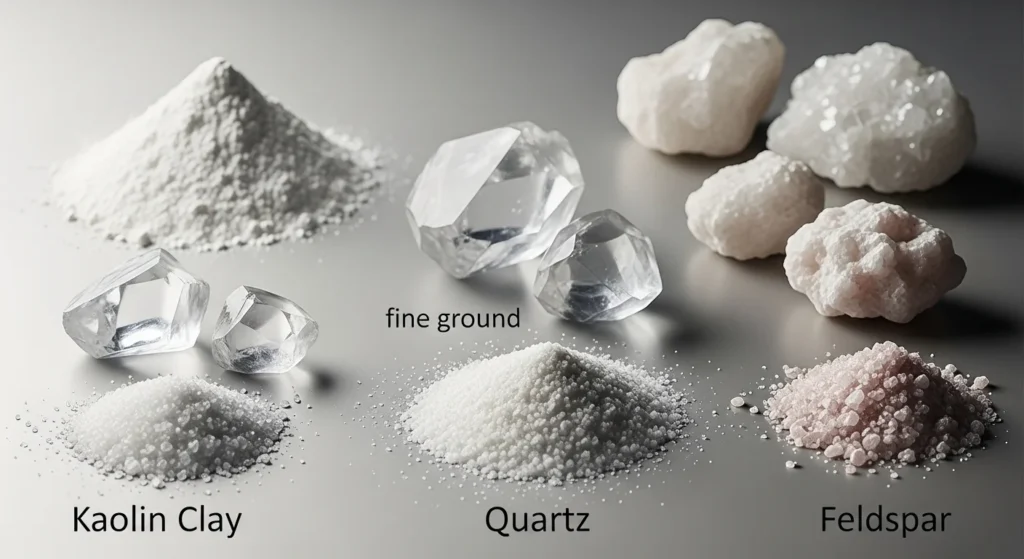
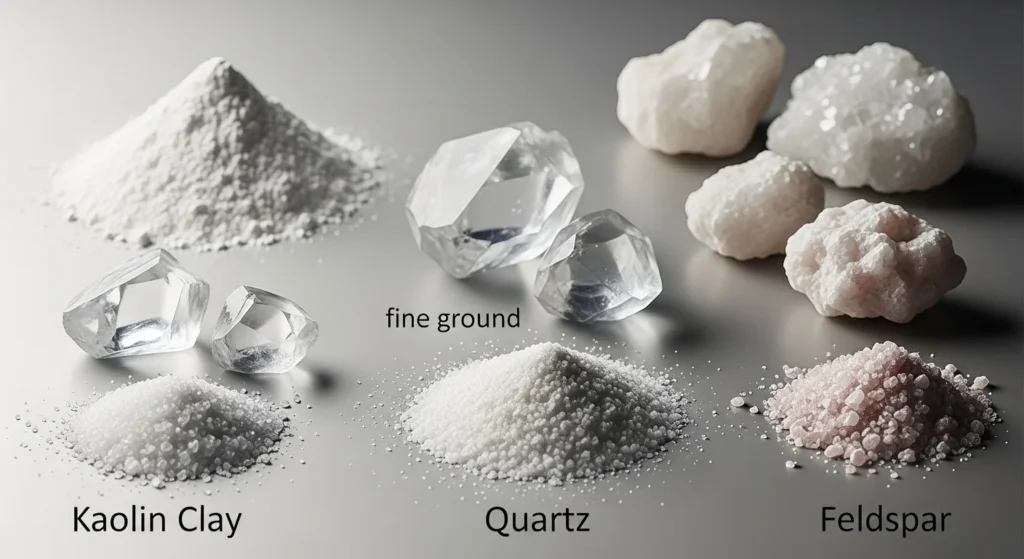
“Porcelain is a combination of feldspar, quartz and kaolin… fired in a kiln at temperatures up to 1400°C, resulting in a hard, white, non-porous pottery.” — William Edwards
The Critical Insight: Porcelain is not just white ceramic. It is vitrified ceramic—transformed by extreme heat into a substance glass-like in its density, stone-like in its hardness, jade-like in its translucency.
Part 2: The Primary Synonyms – Terms for True Porcelain
The “China” Family – Geographic Origin as Brand
| Term | Origin | Implication | Modern Usage |
|---|---|---|---|
| China | Short for “China-ware” | Original Chinese porcelain | General tableware |
| Fine china | Quality distinction | High-grade, durable | Marketing, retail |
| Hard-paste porcelain | Technical, European | True porcelain with kaolin | Collectors, museums |
| True porcelain | Authenticity claim | Original formula vs. imitations | Connoisseurship |
The “China” Story: When European traders first encountered Chinese porcelain in the 16th century, they had no word for it. They called it simply “China-ware”—ware from China. The name stuck, becoming generic for all high-quality ceramics, then narrowing again to distinguish porcelain from earthenware.
The “Paste” Distinction – European Technical Terms
| Term | Composition | Firing | Characteristics |
|---|---|---|---|
| Hard-paste porcelain | Kaolin, feldspar, quartz | 1,400°C+ | Hard, glassy, resonant, durable |
| Soft-paste porcelain | Clay + glass frit (no kaolin) | 1,100–1,250°C | Softer, granular, more porous, “chalky” |
The Historical Divide:
- Hard-paste: Invented in China (Tang Dynasty, 9th century); European production began at Meissen (Germany, 1710) after kaolin discovery
- Soft-paste: European imitation developed before kaolin access (France, England, 17th–18th centuries); discontinued at Sèvres in 1804
“Soft-paste porcelain can be cut with a file, while hard-paste cannot.” — Ember Collective
Part 3: The Bone China Revolution – English Innovation
The Ash That Changed Everything
Bone china represents the English contribution to porcelain history—a hybrid material that became the standard for fine tableware.
| Component | Percentage | Function |
|---|---|---|
| Bone ash (calcined cattle bones) | 30–50% | Strength, translucency, whiteness |
| Kaolin | 25% | Body, plasticity |
| Feldspar | 25% | Glass former, hardness |
| Quartz | Remainder | Stability, strength |
The Bone China Advantage:
- Stronger than true porcelain—resists chipping
- More translucent—”warm” ivory tone vs. cold white
- Lighter weight—thin walls possible
- Developed 1794–1800 by Josiah Spode, Staffordshire
“Bone china, also composed of kaolin, feldspar and quartz, has the greatest strength and resilience of all ceramics with the addition of bone ash to its raw materials.” — William Edwards
The “Fine Bone China” Grading:
| Grade | Bone Ash Content | Quality Indicator |
|---|---|---|
| Fine bone china | 30%+ | High quality, thin walls, delicate appearance |
| Bone china (standard) | 25–30% | Durable, commercial grade |
| English porcelain | Variable | May contain little or no bone ash |
Part 4: The Ceramic Taxonomy – Where Porcelain Fits
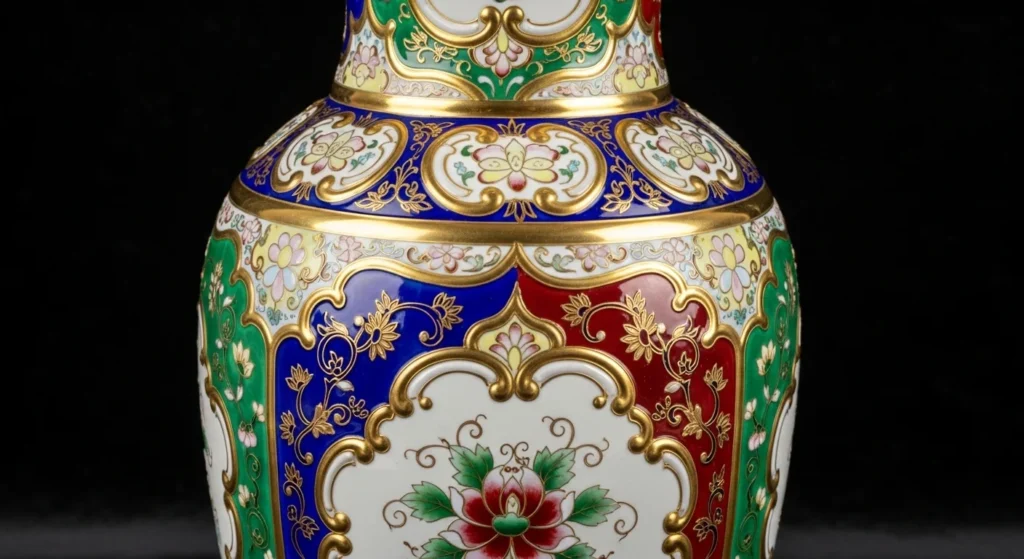
The Complete Hierarchy
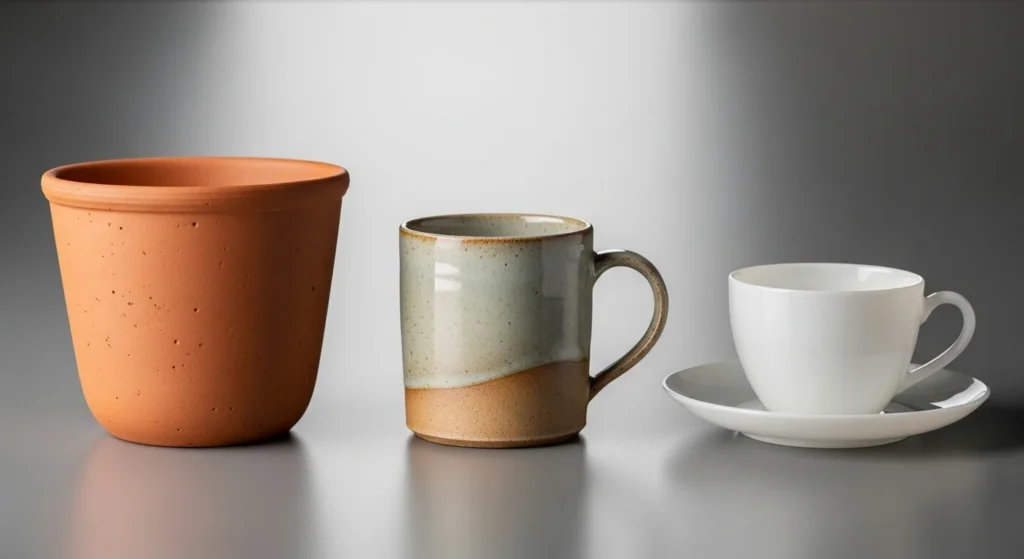
Understanding porcelain requires knowing what it is not:
| Category | Firing Temp | Porosity | Examples | Relation to Porcelain |
|---|---|---|---|---|
| Earthenware | 1,000–1,150°C | Porous (requires glaze) | Terracotta, majolica, faience | Not porcelain—lower fired, coarser |
| Stoneware | 1,200°C | Low porosity, dense | German beer steins, Japanese raku | Adjacent—similar firing, different clay |
| Porcelain | 1,200–1,450°C | Virtually non-porous | Hard-paste, soft-paste, bone china | The summit—vitrified, translucent |
| Porcelain stoneware | 1,200–1,400°C | Extremely low porosity | Modern floor/wall tiles | Industrial hybrid—porcelain durability, stoneware practicality |
The Stoneware Confusion:
“Stoneware is made from a particular clay which is fired at a higher temperature of 1,200°C. This results in a more durable material, with a denser, stone-like quality.” — Nom Living
Stoneware approaches porcelain in hardness but lacks translucency and uses different clays (less kaolin, more ball clay and fireclay).
Part 5: The Historical & Technical Synonyms – 30+ Specialized Terms
The Manufacturing Vocabulary
| Term | Definition | Context |
|---|---|---|
| Bisque / Biscuit | Unglazed, once-fired porcelain | Decorative figurines, ready for painting |
| Vitreous china | Porcelain with high glass content | Sanitary ware (sinks, toilets)—extremely durable |
| Parian | Unglazed, matte-finish porcelain | 19th-century statuary, marble-like |
| Belleek | Thin, slightly iridescent Irish porcelain | Specific factory, 1857–present |
| Ironstone | Hard, white, durable (not true porcelain) | 19th-century English, mass-produced tableware |
| Creamware | Cream-colored lead-glazed earthenware | Pre-porcelain, Wedgwood innovation |
| Pearlware | Whitened creamware | Transitional to true porcelain whiteness |
The Cultural & Geographic Terms
| Term | Origin | Characteristics |
|---|---|---|
| Hard paste | Chinese/European | True porcelain formula |
| Soft paste | French/English pre-1800 | Imitation, glass-frit based |
| Sèvres | French factory | Famous for soft-paste (1750–1804), then hard-paste |
| Meissen | German factory | First European hard-paste (1710), “blue crossed swords” mark |
| Kakiemon | Japanese style | Enamel decoration on porcelain |
| Imari | Japanese export style | Bold blue, red, gold on porcelain |
| Famille verte/rose | Chinese export styles | Green or pink enamel palettes |
| Blanc de Chine | Chinese Dehua porcelain | Pure white, unglazed figurines |
Part 6: The Decorative & Artistic Synonyms
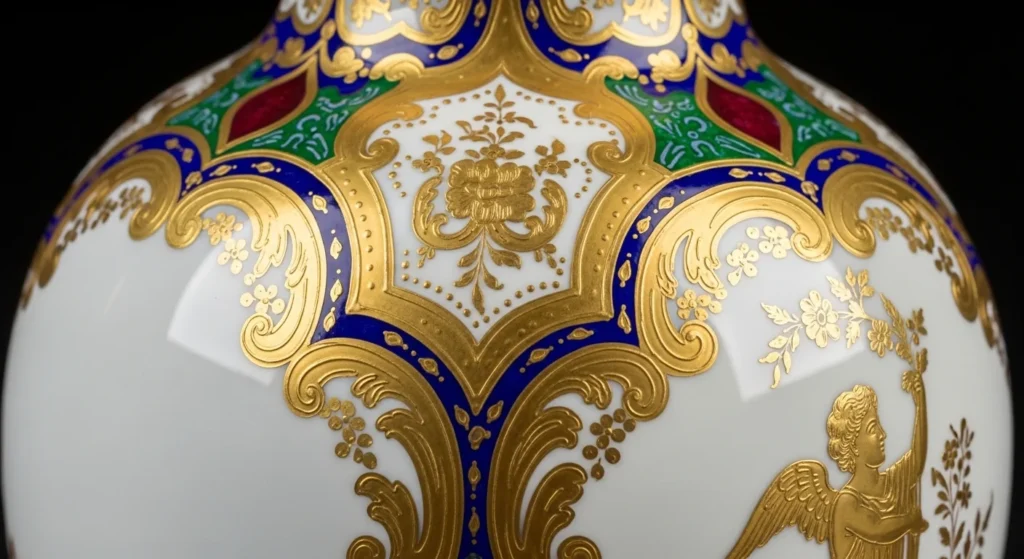
The Surface Treatment Vocabulary
| Term | Technique | Appearance |
|---|---|---|
| Glazed | Glass coating fired onto surface | Shiny, colored, protected |
| Unglazed / Biscuit | No glaze, matte surface | Chalky, absorbent, sculptural |
| Gilded | Gold leaf or gold paint application | Luxurious, ornate |
| Enamel | Opaque glass colors painted on | Bright, detailed, jewel-like |
| Underglaze | Decoration applied before glaze | Durable, integrated with body |
| Overglaze | Decoration applied after glaze | Brighter colors, less durable |
| Transfer-printed | Mechanical pattern application | Reproducible, detailed |
| Hand-painted | Artisan decoration | Unique, valuable, irregular |
Part 7: The Modern & Industrial Synonyms
Contemporary Ceramic Terminology
| Term | Application | Characteristics |
|---|---|---|
| Vitreous china | Sanitary fixtures | Non-porous, durable, easy-clean |
| Porcelain stoneware | Floor/wall tiles | High density, low absorption, versatile |
| Technical porcelain | Industrial applications | Engineered for specific properties |
| Dental porcelain | Medical/dental | Biocompatible, aesthetic, strong |
| Alumina porcelain | High-tech applications | Added aluminum oxide for extreme hardness |
Part 8: Context-Specific Selection Framework
For Collectors & Connoisseurs
✅ Hard-paste, soft-paste, bone china, Sèvres, Meissen, period terms
❌ Avoid: Generic “china,” “porcelain” without qualification
Example: “This hard-paste Sèvres biscuit figurine represents soft-paste production before 1804.”
For Interior Designers & Retail
✅ Fine china, bone china, porcelain stoneware, vitreous china
❌ Avoid: Technical paste distinctions (too detailed for general marketing)
Example: “Our fine bone china collection offers translucent elegance for formal dining.”
For Historians & Academics
✅ True porcelain, artificial porcelain, hard-paste, soft-paste, compositional analysis
❌ Avoid: “China” as generic (imprecise for scholarly work)
Example: “Soft-paste porcelain factories utilized glass-frit formulas before kaolin discovery enabled true porcelain production.”
For Manufacturers & Engineers
✅ Vitreous china, porcelain stoneware, technical ceramics, alumina porcelain
❌ Avoid: Decorative period terms (irrelevant for industrial specifications)
Example: “Vitreous china sanitary ware provides zero absorption and chemical resistance.”
Part 9: The Etymological Treasury – Roots of Ceramic Perfection
The Chinese Origins
- Porcelain — From Old French porcelaine, referring to the cowrie shell (porcellana), whose surface resembled fine ceramic
- Kaolin — From Chinese 高岭 (Gaoling), “high ridge,” location of the original Chinese mines
- China — Geographic origin becoming generic trademark
The European Adaptations
- Paste — French pâte, “dough”—the malleable mixture before firing
- Biscuit — French “twice-cooked”—the first firing before glazing
- Bone china — English innovation, literal description of composition
Part 10: The Motivational Synthesis – Lessons from Porcelain
The Porcelain Philosophy
- Vitrification through fire — Transformation requires extreme pressure
- Transluency through purity — Clarity comes from refined composition
- Resonance through structure — Quality rings true when tested
- Strength through bone — Unexpected ingredients create durability
“Porcelain is the result of humble clay, subjected to fire, emerging as something translucent, resonant, and enduring. The metaphor is not subtle.”
Conclusion: The Vocabulary of Enduring Beauty
To possess this ceramic arsenal—80+ terms for the material that defined luxury for millennia—is to hold language’s most refined vocabulary. Use it with precision, with historical awareness, and with the understanding that to name porcelain truly is to invoke 1,400 years of human craftsmanship.
Whether you’re collecting Meissen hard-paste, serving tea on Spode bone china, specifying vitreous china for commercial projects, or simply appreciating blanc de Chine figurines, precision in porcelain vocabulary distinguishes connoisseur from casual consumer.
Final Quote: “All porcelain is ceramic, but not all ceramic is porcelain. To know the difference is to know the fire.”
FAQ: Mastering Porcelain Vocabulary
Q: What’s the difference between “china” and “porcelain”?
A: Technically, nothing. “China” is short for “China-ware”—ware from China. In American usage, “china” often implies tableware; “porcelain” implies material. In British usage, they’re more interchangeable.
Q: Is bone china “real” porcelain?
A: Yes, but distinct. Bone china is English porcelain with bone ash addition, making it stronger and more translucent than traditional hard-paste. It’s not “true porcelain” in the strict Chinese/European definition, but superior for tableware.
Q: Can I tell hard-paste from soft-paste by appearance?
A: Sometimes. Hard-paste is harder, more glassy, more resonant when struck. Soft-paste is slightly warmer in tone, more granular if chipped, and scratches more easily. The “file test” (soft-paste cuts with a file) is definitive but destructive.
Q: Which term is best for SEO content about luxury tableware?
A: “Fine bone china” captures high-end searches; “hard-paste porcelain” captures collector interest; “vintage china” captures estate sale traffic. Use “porcelain” as the broad category term.
Q: Is porcelain stoneware “real” porcelain?
A: It’s a hybrid. Porcelain stoneware has porcelain’s density and low porosity but uses stoneware clay formulations. It’s industrially classified with porcelain but lacks translucency. Ideal for floors, walls, heavy-use applications.
Conclusion
Exploring synonyms for porcelain enriches vocabulary and deepens appreciation for the cultural and artistic significance of fine ceramics. Each related term carries its own nuance, whether referring to delicate china used for dining, decorative pottery admired in museums, or high-quality ceramic art crafted with remarkable skill. Further reading at…
By learning and using synonyms for porcelain, writers and learners can express ideas with greater sophistication and variety. Much like porcelain itself, which blends strength with delicate beauty, these words add refinement and subtle texture to language, making communication more vivid and engaging.
The author is a Ph.D scholar and writes on multiple topics of interests related to science, technology, society, history etc. The purpose behind all this stuff is to raise public awareness in different domains.