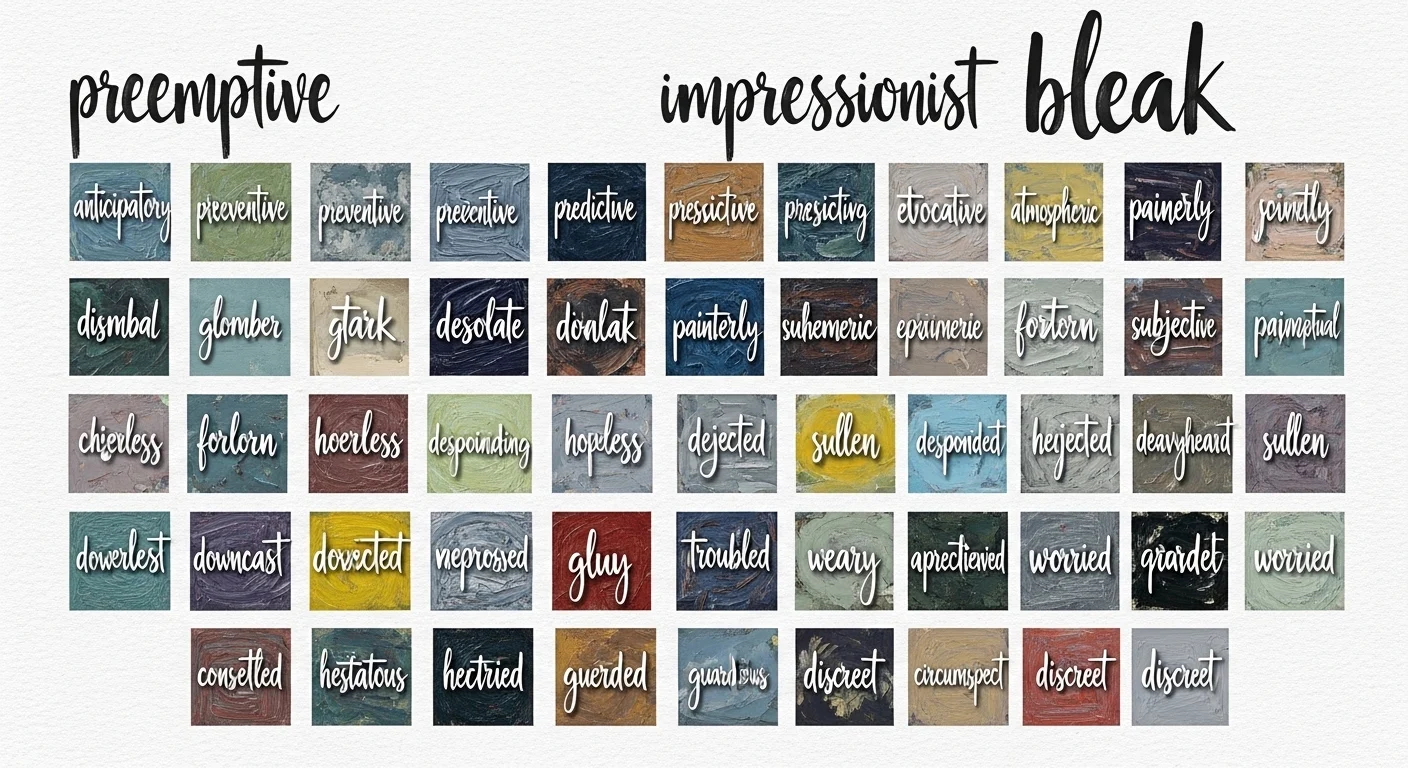
Synonyms of Preemptive are the words that point towards the actions before something happens. Imagine you carry an umbrella because dark clouds are forming. Rain has not started yet, but your action comes early. That simple choice is preemptive. This word is widely used in business, healthcare, technology, security, and daily planning because people often act before problems appear.
Learning synonyms of preemptive plays an important role in developing strong English skills. First of all, it helps English learners and content writers avoid repeating the same word again and again, which often makes writing sound dull or mechanical. When writers know several related words, they can express ideas more naturally and creatively. As a result, sentences become smoother, clearer, and more engaging for readers. Let us try graspy more synonyms of preemptive in the following lines.
In addition, a rich vocabulary allows speakers to communicate thoughts with confidence and precision. Instead of searching for words during conversation, learners can respond quickly and effectively. Furthermore, understanding synonyms also improves reading comprehension because many academic and professional texts use varied vocabulary to describe similar ideas.
Therefore, this article not only explains the meaning of preemptive but also explores its pronunciation, grammatical structure, historical background, emotional tone, and semantic usage. Along the way, you will discover powerful synonyms supported by practical examples. Consequently, you will learn how to choose the most suitable word depending on context, tone, and purpose.
Meaning of Preemptive
Definition
Preemptive (Adjective): done in advance in order to prevent, reduce, or control a possible event, risk, or problem before it actually occurs.
In simple terms, a preemptive action happens before trouble begins, not after it appears.
Examples
- The company took preemptive steps to stop data loss before the system failed.
- Doctors provided preemptive treatment before surgery to reduce possible infection risks.
These examples show how early action often prevents larger difficulties later.
Connotative Meaning
(Connotation refers to the emotional feeling or association connected with a word beyond its direct dictionary meaning.)
Depending on context, preemptive may carry different emotional shades:
- Positive tone:
Suggests intelligence, careful planning, responsibility, and readiness for future challenges. - Negative tone:
May imply excessive control, suspicion, or aggressive action taken too early. - Neutral tone:
Simply describes preventive or early action without emotional judgment.
Thus, understanding connotation helps learners use preemptive appropriately in academic, professional, or everyday communication.
Etymology
- From Latin prae meaning “before”
- From Latin emere meaning “to take or buy”
- Entered English through the verb preempt
Short History
- Old English (450–1100): Early ideas expressed using phrases meaning prior action.
- Middle English (1100–1500): Legal language adopted concepts of prior claim or early possession.
- Modern English (1500–Present): Developed into preempt and later preemptive, meaning preventive or anticipatory action.
Pronunciation
Correct pronunciation is essential because it helps learners speak confidently and avoid misunderstanding. The word preemptive may look complex at first glance; however, once broken into sound units, it becomes much easier to pronounce.
- US Pronunciation: /priˈɛmptɪv/
- UK Pronunciation: /priːˈɛmptɪv/
In both American and British English, the main stress falls on the second syllable, which gives the word its natural rhythm. Therefore, speakers should slightly emphasize emp while keeping the beginning and ending sounds soft and smooth.
Syllables
pre-emp-tive
Dividing the word into syllables helps learners pronounce it step by step. First, say pre, then clearly pronounce emp, and finally finish with tive. Practicing syllable division gradually improves fluency and spoken accuracy.
Affixation Pattern of Preemptive
Understanding word structure makes vocabulary learning faster and more logical. The word preemptive is formed through a combination of prefix, root, and suffix, each contributing meaning.
Root
empt → means to take or to seize.
This core idea relates to taking action or control.
Prefix
pre– → means before.
It indicates that the action happens earlier than expected.
Suffix
–ive → expresses quality, tendency, or characteristic.
It turns the word into an adjective describing a type of action.
Together, these parts create the meaning: taking action before something happens.
Word Formation
Learning related word forms helps learners use vocabulary across different grammatical situations. From the base concept preempt, several useful forms develop:
1. Meaning or Definition Intent
Many users want to know what the word “preemptive” means.
They are looking for a clear definition and a simple explanation.
Example intent:
- What does preemptive mean?
- When is the word preemptive used?
2. Synonym Discovery Intent
Users often want alternative words with similar meanings so they can improve their writing or vocabulary.
Common synonyms they may expect include:
- preventive
- anticipatory
- proactive
- precautionary
- pre-empting
- forestalling
3. Writing and Vocabulary Improvement
Students, bloggers, and writers frequently search for synonyms to avoid repetition and make their writing more professional and varied.
Example needs:
- finding better words for essays
- improving blog writing
- expanding vocabulary
4. Contextual Usage Intent
Some users also want to know how the word and its synonyms are used in sentences or in specific contexts such as politics, strategy, or everyday language.
For example:
- a preemptive action
- a preemptive strategy
- a preemptive decision
Summary of User Intent
The keyword “preemptive and its synonyms” generally reflects:
- Informational intent (learning the meaning)
- Educational intent (expanding vocabulary)
- Writing improvement intent (finding alternative words)
In short, the user wants the meaning, synonyms, and proper usage of the word “preemptive.” 📚✨
If you want, I can also show you how to structure a perfect SEO section for “Synonyms of Preemptive” that ranks well on Google.
What different words can be formed from preemptive
The word preemptive can generate several related words through common English word-formation processes such as derivation, inflection, and word family expansion. These related forms help writers express similar ideas in different grammatical roles.
Words Formed from “Preemptive”
Noun Forms
These forms describe the action or concept behind the word.
- preemption
The act of taking action before someone else or before an event occurs. - preemptor
A person who preempts or takes action first.
Verb Forms
These express the action itself.
- preempt
To act before someone else in order to prevent something. - preempted
- preempting
- preempts
Adjective Forms
These describe something that is done in advance to prevent another action.
- preemptive
Done beforehand to prevent or control a situation. - preemptory
A less common form meaning tending to preempt.
Adverb Form
- preemptively
In a way that prevents something before it happens.
Simple Word Family
The word family built from preemptive typically includes:
- preempt
- preempted
- preempting
- preempts
- preemption
- preemptive
- preemptively
- preemptor
Consequently, understanding word formation allows learners to move easily between speaking, writing, and academic expression while maintaining grammatical accuracy.
Synonyms of Preemptive
1. Proactive (Adjective)
US /proʊˈæktɪv/ | UK /prəʊˈæktɪv/
Meaning: acting before problems occur.
- She took proactive safety measures.
- A proactive plan saved time.
2. Preventive (Adjective)
US /prɪˈvɛntɪv/ | UK /prɪˈventɪv/
Meaning: stopping something harmful early.
- Preventive care reduces disease.
- They used preventive tools.
3. Anticipatory (Adjective)
US /ænˈtɪsɪpətɔri/ | UK /ænˈtɪsɪpətəri/
Meaning: based on expectation of the future.
- Anticipatory action avoided delay.
- He made anticipatory changes.
4. Precautionary (Adjective)
US /prɪˈkɔːʃəneri/ | UK /prɪˈkɔːʃənəri/
Meaning: done for safety before danger.
- Precautionary checks were completed.
- Roads were closed as precautionary steps.
5. Defensive (Adjective)
US /dɪˈfɛnsɪv/ | UK /dɪˈfensɪv/
Meaning: protecting against harm.
- Defensive planning helped the team.
- The move was defensive.
6. Forward-looking (Adjective)
US /ˌfɔrwərd ˈlʊkɪŋ/ | UK /ˌfɔːwəd ˈlʊkɪŋ/
Meaning: focused on future outcomes.
- A forward-looking policy succeeds.
- Leaders need forward-looking ideas.
7. Early (Adjective)
US /ˈɜrli/ | UK /ˈɜːli/
Meaning: happening before expected time.
- Early action prevented loss.
- They made an early decision.
8. Timely (Adjective)
US /ˈtaɪmli/ | UK /ˈtaɪmli/
Meaning: done at the correct moment.
- Timely help saved resources.
- The warning was timely.
9. Prior (Adjective)
US /ˈpraɪər/ | UK /ˈpraɪə/
Meaning: existing before something else.
- Prior planning ensured success.
- He had prior knowledge.
10. Preplanned (Adjective)
US /priːˈplænd/ | UK /priːˈplænd/
Meaning: arranged earlier.
- A preplanned response worked well.
- The event was preplanned.
11. Prearranged (Adjective)
US /ˌpriːəˈreɪndʒd/ | UK /ˌpriːəˈreɪndʒd/
Meaning: organized beforehand.
- They followed a prearranged plan.
- Meetings were prearranged.
12. Premeditated (Adjective)
US /priːˈmɛdɪteɪtɪd/ | UK /priːˈmedɪteɪtɪd/
Meaning: carefully planned earlier.
- The decision was premeditated.
- It was a premeditated action.
13. Advance (Adjective)
US /ədˈvæns/ | UK /ədˈvɑːns/
Meaning: done before time.
- Advance warning helped citizens.
- Tickets were bought in advance.
14. Anticipative (Adjective)
US /ænˈtɪsɪpeɪtɪv/ | UK /ænˈtɪsɪpeɪtɪv/
Meaning: expecting future needs.
- Anticipative thinking improves leadership.
- She showed anticipative skills.
15. Forestalling (Verb/Adj.)
US /fɔrˈstɔːlɪŋ/ | UK /fɔːˈstɔːlɪŋ/
Meaning: preventing before occurrence.
- Steps forestalling risk were taken.
- They acted forestalling conflict.
16. Thwarting (Verb/Adj.)
US /ˈθwɔrtɪŋ/ | UK /ˈθwɔːtɪŋ/
Meaning: stopping plans early.
- Police were thwarting attacks.
- Early action stopped threats.
17. Precluding (Verb/Adj.)
US /priːˈkluːdɪŋ/ | UK /priːˈkluːdɪŋ/
Meaning: making something impossible beforehand.
- Rules precluding errors helped.
- Safety checks prevented harm.
18. Blocking (Verb/Adj.)
US /ˈblɑːkɪŋ/ | UK /ˈblɒkɪŋ/
Meaning: preventing progress.
- Software blocked threats.
- Guards blocked entry.
19. Averting (Verb/Adj.)
US /əˈvɜːrtɪŋ/ | UK /əˈvɜːtɪŋ/
Meaning: turning away danger early.
- Action averted crisis.
- Measures averted risk.
20. Warding (Verb/Adj.)
US /ˈwɔːrdɪŋ/ | UK /ˈwɔːdɪŋ/
Meaning: protecting against harm.
- Medicine wards off illness.
- They were warding danger.
21. Deterrent (Adj./Nou)
US /dɪˈtɜːrənt/ | UK /dɪˈterənt/
Meaning: discouraging problems beforehand.
- Cameras act as deterrents.
- Laws create deterrent effects.
22. Protective (Adjective)
US /prəˈtɛktɪv/ | UK /prəˈtektɪv/
Meaning: keeping safe from harm.
- Protective gear helped workers.
- Protective action was taken.
23. Anticipant (Adjective)
US /ænˈtɪsɪpənt/ | UK /ænˈtɪsɪpənt/
Meaning: expecting in advance.
- Anticipant planning helps success.
- He remained anticipant.
24. Forehanded (Adjective)
US /fɔrˈhændɪd/ | UK /fɔːˈhændɪd/
Meaning: prepared beforehand.
- A forehanded worker succeeds.
- They were forehanded planners.
25. Beforehand (Adverb/Adj.)
US /bɪˈfɔːrhænd/ | UK /bɪˈfɔːhænd/
Meaning: done earlier.
- Inform people beforehand.
- Payment was made beforehand.
26. Preparatory (Adjective)
US /prɪˈpærətɔri/ | UK /prɪˈpærətəri/
Meaning: serving as preparation.
- Preparatory work started early.
- They took preparatory steps.
27. Readying (Verb/Adj.)
US /ˈrɛdiɪŋ/ | UK /ˈrediɪŋ/
Meaning: making something prepared.
- Teams were readying supplies.
- They kept readying plans.
28. Preempting (Verb/Adj.)
US /priːˈɛmptɪŋ/ | UK /priːˈɛmptɪŋ/
Meaning: acting before others.
- They were preempting threats.
- Strategy involved preempting risk.
29. Prophylactic (Adjective)
US /ˌproʊfəˈlæktɪk/ | UK /ˌprɒfəˈlæktɪk/
Meaning: preventing disease or harm.
- Prophylactic treatment helped.
- Doctors used prophylactic care.
30. Safeguarding (Verb/Adj.)
US /ˈseɪfɡɑːrdɪŋ/ | UK /ˈseɪfɡɑːdɪŋ/
Meaning: protecting in advance.
- Laws safeguard rights.
- Measures safeguard data.
Prototype Meaning
When people hear the word preemptive, they usually picture thoughtful action taken before trouble has a chance to grow. Instead of waiting for danger or difficulty, the action begins early and with purpose. In other words, a preemptive step reflects awareness, careful judgment, and forward thinking.
Moreover, the word often creates an image of preparation that quietly protects future success. Rather than reacting under pressure, a person or organization plans ahead and stays ready. Therefore, preemptive strongly connects with ideas of prevention, readiness, and intelligent decision-making long before problems appear. Read more….
Prototype Categorization
To understand synonyms clearly, it helps to organize them into meaningful groups. Each category highlights a slightly different shade of meaning.
- Planning words: proactive, anticipatory, preparatory
→ These emphasize foresight and organized thinking before action. - Protection words: defensive, protective, safeguarding
→ These focus on safety and reducing possible harm. - Prevention words: preventive, deterrent, prophylactic
→ These stress stopping danger before it begins. - Timing words: early, prior, timely
→ These highlight action taken at the right moment in advance.
Thus, categorization allows writers and learners to choose vocabulary more precisely. As a result, communication becomes clearer, tone becomes stronger, and writing sounds more natural within different contexts.
Antonyms of Preemptive
Understanding opposites further strengthens vocabulary awareness.
- Reactive (Adjective): acting only after an event happens
- Delayed (Adjective): performed later than necessary
- Unprepared (Adjective): lacking readiness or planning
- Neglectful (Adjective): failing to prevent foreseeable problems
- Passive (Adjective): not taking initiative or early action
These antonyms represent situations where response replaces preparation.
Short Questions and Answers
How is it different from similar words?
Preemptive highlights action taken before something happens, whereas preventive mainly emphasizes stopping harm itself.
What does preemptive mean?
It means taking action early in order to prevent or control a future event.
When should preemptive be used?
It should be used when describing planning, safety measures, or decisions made before problems arise.
Is preemptive positive or negative?
Generally, it carries a positive meaning because it shows preparedness; however, in political or military contexts, it may sometimes sound aggressive.
Conclusion
Learning the word preemptive along with its synonyms greatly enriches vocabulary development. First, it improves writing clarity by offering precise alternatives. Next, it strengthens speaking skills by reducing repetition and increasing expression variety. In addition, strong synonym knowledge supports academic writing, blogging, and professional communication.
Over time, consistent vocabulary practice builds confidence and linguistic accuracy. When learners actively explore related words each day, English becomes more flexible, expressive, and powerful. Ultimately, mastering words like preemptive transforms simple communication into confident and effective language use, allowing ideas to be expressed with foresight and clarity.

The author is a Ph.D scholar and writes on multiple topics of interests related to science, technology, society, history etc. The purpose behind all this stuff is to raise public awareness in different domains.